August 19, 2026
Muse Glimmer: local AI agents come to operations software
The interesting part of Meta's new open model is not its size. It is that it was trained to keep going when a tool call fails, which is exactly where most business automations break.
Takeaway
Meta released Muse Glimmer, a 30-billion-parameter open-weight model under Apache 2.0, built for tool calling and failure recovery on a single GPU. Here is where local agents fit inside POS, booking, HR and ERP workflows, and where they do not yet.
Meta has released Muse Glimmer, a 30-billion-parameter open-weight model under the Apache 2.0 licence, and positioned it as a model for local agents: software that plans a task, calls tools in sequence, checks its own work and recovers when a step fails. The quantized version runs on a single GPU with 24 to 32 GB of memory. For businesses that have been told agents need a cloud contract and a data-transfer review, this is a meaningful change in what can run inside your own building. It is not, on its own, a reason to put an agent in charge of your operations.
What happened
In its developer announcement dated 12 August 2026, Meta describes Muse Glimmer as an open model "built for local agents". The headline facts:
- Size and licence: 30 billion parameters, released under Apache 2.0, which Meta calls the most permissive licence it has used for an open model. Commercial use, modification and fine-tuning are allowed without negotiating terms.
- Hardware: quantized weights need roughly 24 to 32 GB of GPU memory, which puts the model on a single workstation-class GPU or a high-memory desktop. Full precision needs more.
- Context and input: a default context window of 128K tokens, with text and image input.
- Agent behaviour: Meta says tool calling "holds up over long sequences" with precise schemas, and that when a tool fails the model "recovers instead of halting".
Meta is also clear about the limits. Quantization can reduce quality compared with full-precision weights, so Meta recommends validating the checkpoint on your own workload before deployment. Long reasoning chains can produce multi-thousand-token outputs that need streaming. The announcement does not list supported languages, and Arabic is not mentioned.
Why it matters for operators
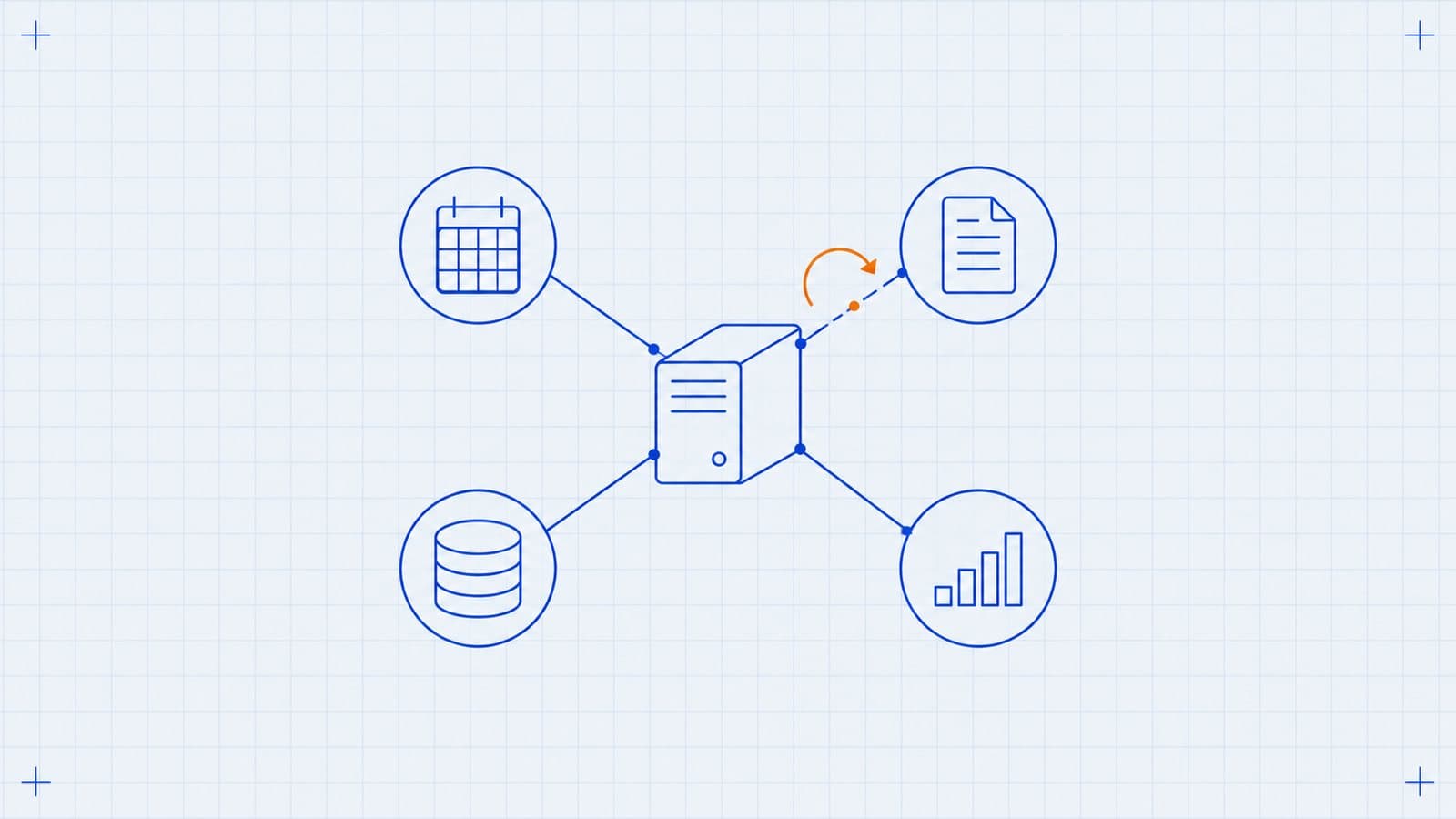
Most automation in operations software fails in the same place: the middle of a multi-step task. A booking agent checks availability, the calendar API times out, and the whole flow stops. A purchasing assistant reads a supplier invoice, the ERP rejects a line because of a unit mismatch, and nobody notices until month end. Models that were good at answering questions were often poor at this kind of loop. A model trained specifically to diagnose a failed tool call and retry sensibly targets the weak point that kept agents in demos.
The second shift is where it runs. A 30B model on one GPU can sit on a server in your office or in a Saudi data centre you control. For workflows that touch personal data, such as employee files, customer records or patient bookings, that changes the conversation under the Personal Data Protection Law. If the model never sends data outside your infrastructure, you avoid a cross-border transfer question entirely, although you still need a lawful basis, access controls and logging for the processing itself.
The catch is language. Much of the operational text in a Saudi business is Arabic or mixed Arabic and English: WhatsApp orders, supplier notes, HR requests, customer complaints. Meta has not published Arabic results for Muse Glimmer. Until you have tested it on your own messages, treat Arabic quality as unknown.
Where it helps, and where it is premature
Good first candidates are narrow, repetitive, tool-heavy tasks where a mistake is visible and reversible:
- Reconciling delivery-platform payouts against POS sales and flagging mismatches for a person to review.
- Drafting purchase orders from low-stock alerts, with a manager approving before anything is sent.
- Checking HR records for documents that expire in the next 60 days and preparing the renewal checklist.
- Triaging maintenance or support tickets into the right queue with a short summary.
What is still premature is letting an agent act on its own in anything that moves money, changes prices, approves compliance decisions or messages customers without review. "Recovers instead of halting" is useful, but recovering by retrying a payment or resending a customer message is exactly what you do not want. Agents also need clean, well-defined tools to call. If your POS, booking system and ERP do not expose reliable APIs with clear permissions, the model has nothing safe to work with.
Cicada Solutions view
Muse Glimmer is a strong signal that capable agents are moving from cloud-only to something an operator can host. Our advice is to prepare the ground before choosing a model. List the three or four workflows where staff spend the most time moving data between systems. Make sure each system in those workflows has an API with role-based permissions and an audit log. Write down what a correct result looks like for 50 real examples, in Arabic where your work is in Arabic, and use that set to test Muse Glimmer or any alternative. Keep a person approving anything irreversible.
Done that way, the model becomes a replaceable component behind your own interfaces, and the work you put into clean tools and test cases still pays off when a better model arrives next quarter. If you want help deciding where an agent belongs in your stack, our notes on where AI belongs in operations software are a good place to start.
Sources
- Meta for Developers: Muse Glimmer, an open-weight model built for local agents - published 2026-08-12, accessed 2026-10-01.
- DataCamp: Muse Glimmer, Meta's open agentic local model - accessed 2026-10-01.
- SDAIA: Laws and Regulations (Personal Data Protection Law) - accessed 2026-10-01.