October 9, 2026
Meta's Muse for Small Business, and the approval rules worth copying
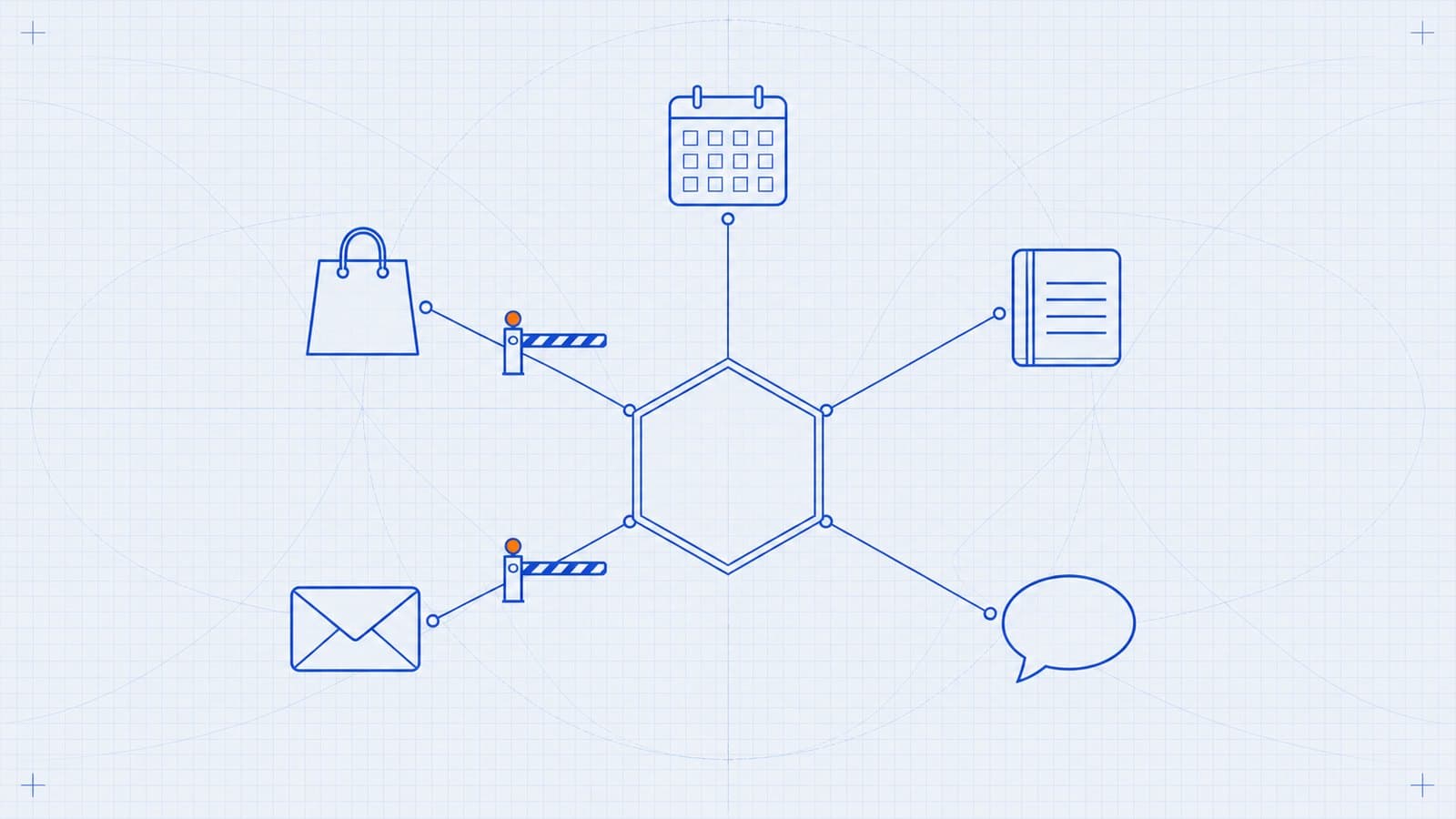
Muse for Small Business is only available in the US and Canada for now. The part worth studying from Riyadh is not the feature list but the line Meta drew around what the agent may do on its own.
Takeaway
Meta's Muse agent now connects to Shopify, QuickBooks, Stripe and Slack for small businesses. It is not in Saudi Arabia yet, but its approval model is a good template for any agent.
On 29 September Meta extended Muse, the personal AI agent it launched earlier in September, into a version for small businesses. Connect your Instagram and Facebook business accounts, your Meta ad account and tools like Shopify, QuickBooks, Stripe and Slack, and Muse will analyse sales, flag unusual expenses, draft campaigns and answer emails. It is free up to a usage limit. It is also only available in the US and Canada, and Meta has not said when other markets follow. So this is not a "sign up today" post. It is about the design choice that makes a tool like this usable in a real business, because the same choice applies to any agent you put near your operations.
What Meta launched
From Meta's announcement and its Muse for Small Business page:
- Tasks: review sales, campaign and social performance and draft a growth plan; go through email, calendar and news to surface priorities; flag emails that need a reply and write first drafts; review monthly financial performance and flag unusual expenses.
- Connectors: Asana, Box, Canva, Dropbox, Figma, Granola, HighLevel, Intuit QuickBooks, Klaviyo, Lovable, Notion, Shopify, Slack, Stripe and Zoom, plus Facebook Pages, Instagram professional analytics and Meta ad accounts. Businesses can add custom connectors for other services.
- Controls: Meta says nothing publishes, sends or spends without the owner's approval, that actions can be undone, and that there is a full audit trail of what Muse has done and plans to do.
- Price and availability: free for most use, with paid plans for more. Retail Dive reports those plans at USD 20 to 100 a month. Available to people aged 18 and over in the US and Canada. Meta does not say which languages are supported, and Arabic is not mentioned.
Retail Dive also reports, from a Meta spokesperson, that Muse uses single-use card numbers when buying from new merchants and that data from its working environment is not shared with Meta's advertising systems.
Why it matters for operators
Most small and mid-sized businesses in Saudi Arabia already run on a mix of tools that look a lot like Muse's connector list: an online store or delivery platforms, an accounting package, a payment provider, Instagram for marketing and WhatsApp for everything else. The pitch is that one agent can read across all of them and do the dull work in between. That pitch will reach the Gulf, whether from Meta or from someone else.
What makes it workable is not how clever the model is. It is where the agent is allowed to act by itself. Meta's answer is simple. Reading and drafting are free. Anything that publishes, sends or spends waits for a person. Every action is recorded. That is close to the rule we already use when we add AI to operational systems, and it is a good test for any agent product you are offered.
Where an agent like this helps
The tasks Meta lists are the right kind of starting point, because a wrong answer is cheap and easy to spot:
- A Sunday morning summary of last week's sales by branch and channel, with the three numbers that moved most.
- A list of supplier invoices that look unusual against the last three months.
- Draft replies to routine customer emails, waiting in an approval queue.
- A first draft of next month's promotion based on what sold.
None of these needs the agent to touch money or customers directly. A manager reads, edits and approves.
Where to be careful
- "Always allow" is a setting, not a policy. Approval systems usually let you skip the prompt for a task, a site or forever. Decide in writing which actions may ever be auto-approved. For most businesses, refunds, price changes, supplier payments and customer messages should never be on that list.
- Connectors decide the risk. An agent connected to your accounting package and payment provider can see your margins and your customers. Check which permissions each connector really needs, and prefer read-only access where you can.
- Personal data. Customer and employee data passing through an agent hosted abroad raises questions under the Personal Data Protection Law about transfers and processing. Know where the data goes before you connect the system that holds it.
- Arabic. Much of the real work in a Saudi business happens in Arabic, often mixed with English. Until a product publishes Arabic support, test it on your own messages before you rely on it.
- Your setup decides the result. An agent reading three sales reports that disagree will give you a confident wrong summary. If your POS, delivery platforms and accounts do not reconcile today, fix that first.
Cicada Solutions view
Muse for Small Business is not something a Saudi operator can use yet, and we would not wait for it. What we would take from it is the pattern: the agent reads and drafts freely, every outbound action waits for a named person, and every step is logged. That pattern works whether the agent is Meta's, a cloud model behind your own tools, or an open model running on your own hardware, which we wrote about when Meta released Muse Glimmer.
If you are thinking about agents, start with the plumbing. Make sure the systems an agent would need have proper APIs, role-based permissions and audit logs. Write down which actions need approval and who approves them. Pick one report or one draft-and-approve task, and measure how much time it saves over a month. Our notes on where AI belongs in operations software go through how we choose those first tasks.
Sources
- Meta: Introducing Muse for Small Business - published 2026-09-29, updated 2026-10-08, accessed 2026-10-09.
- Muse: Muse for Small Business - accessed 2026-10-09.
- TechCrunch: Meta is expanding its AI agent Muse to small businesses - published 2026-09-29, accessed 2026-10-09.
- Retail Dive: Meta debuts AI agent for small businesses - published 2026-10-01, accessed 2026-10-09.
- SDAIA: Laws and Regulations (Personal Data Protection Law) - accessed 2026-10-09.