August 4, 2026
ZATCA Wave 25: e-invoicing integration reaches SAR 187,500 businesses
The threshold just halved again. If your café, salon, clinic or shop is VAT-registered, there is a good chance your till now needs to talk to Fatoora by 1 February 2027.
Takeaway
ZATCA's 25th integration wave covers taxpayers whose VAT-subject revenue exceeded SAR 187,500 in any year from 2022 to 2025. The deadline is 1 February 2027, and it pulls the smallest VAT-registered operators into Phase 2.
Barely a month after Wave 24's 30 June deadline, ZATCA has announced the next group. Wave 25 of the e-invoicing Integration Phase covers every taxpayer whose revenue subject to VAT exceeded SAR 187,500 in 2022, 2023, 2024 or 2025, and those businesses must connect their invoicing systems to the Fatoora platform by 1 February 2027. That is half of Wave 24's SAR 375,000 threshold. For a lot of small operators in Saudi Arabia, this is the wave where e-invoicing stops being something larger companies deal with and becomes a change to the till on their own counter.
What happened
On 24 July 2026, ZATCA published the selection criteria for Wave 25. The wave includes all taxpayers whose VAT-subject revenues exceeded SAR 187,500 in any one of the four years from 2022 to 2025, and ZATCA says it will notify each targeted taxpayer to integrate their e-invoicing solution with Fatoora no later than 1 February 2027. ZATCA has kept its practice of notifying each wave at least six months before its integration date.
Two details matter more than they look. First, 2025 revenue now counts, so a business that only crossed the line last year is in scope. Second, SAR 187,500 is the same figure as the voluntary VAT registration threshold (mandatory registration starts at SAR 375,000). In practice, Wave 25 reaches most businesses that are VAT-registered at all, including many that registered voluntarily because suppliers or corporate customers asked them to.
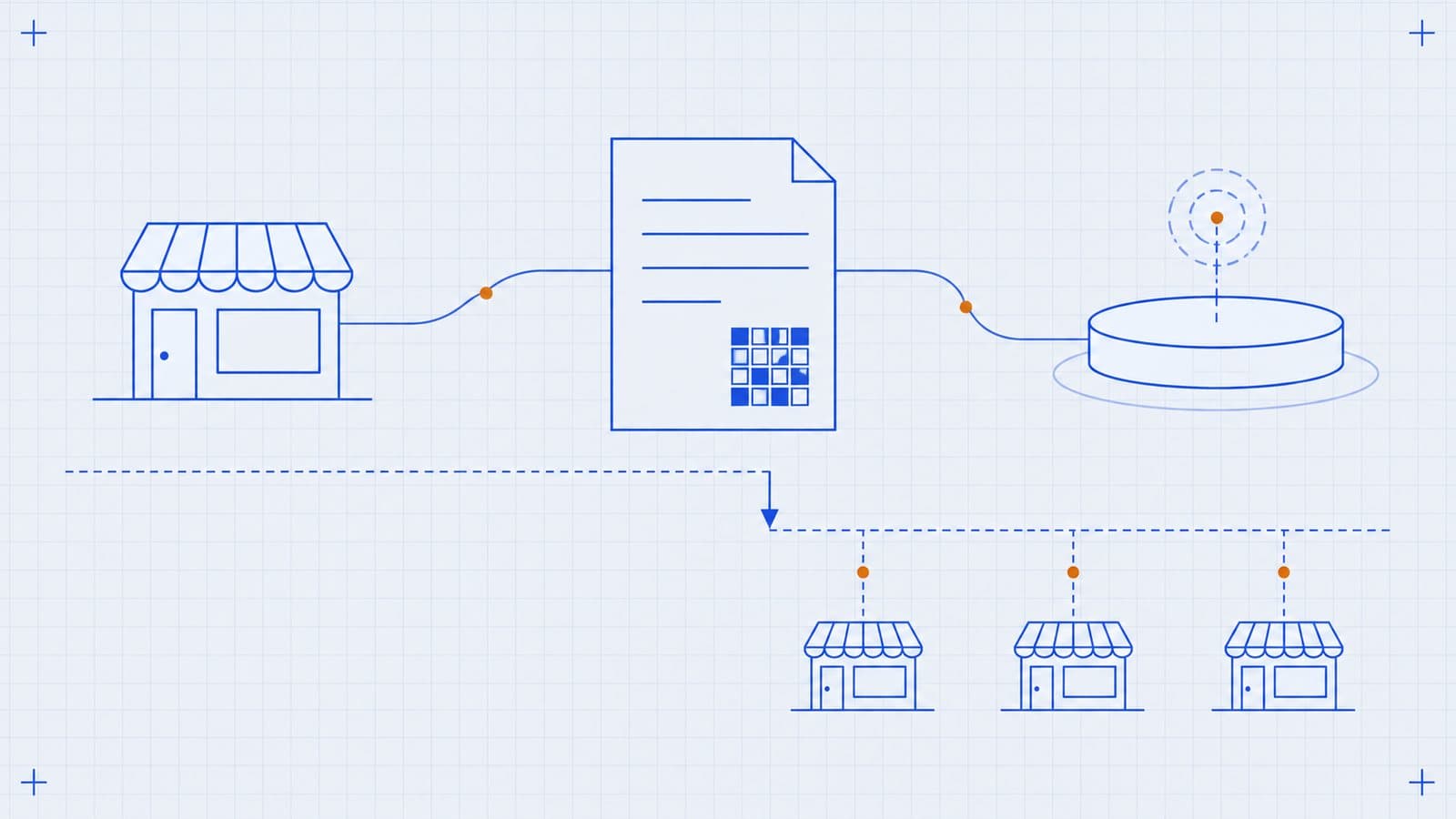
As a reminder of what the Integration Phase involves: Phase 1, in force since 4 December 2021, required compliant systems that generate and store electronic invoices. Phase 2 adds the connection. Your system has to integrate with Fatoora, issue invoices in the prescribed format, and carry the additional fields, including the cryptographic stamp and QR code that ZATCA validates.
Why it matters for operators
The businesses in Wave 25 are mostly B2C: cafés, small restaurants, salons, barbers, pharmacies, boutiques, clinics, car-service shops and small retailers. Their sales are mostly simplified tax invoices, which are reported to ZATCA within 24 hours of being issued rather than cleared before the customer receives them. That sounds forgiving, and it is, but it moves the requirement onto the point of sale itself. The POS has to produce a compliant simplified invoice for every sale, keep selling when the connection drops, and then report the backlog reliably once it is back.
Many small operators run on a mix that was never built for this: a basic cash register, a POS app chosen for its menu screen, an accounting package that someone updates at month end, and a spreadsheet for credit customers. In Waves 20 to 24, companies of this size could often lean on an accountant or a vendor's upgrade. At Wave 25 scale, the vendors, integrators and accountants are serving tens of thousands of newly in-scope businesses at the same time, and the queue forms in the last quarter before the deadline.
There is also the B2B edge case. A small supplier that occasionally invoices a company, a hotel or a government entity issues standard tax invoices, and those must be cleared by ZATCA before they reach the buyer. If your POS handles only simplified invoices and your B2B invoices are typed up in a separate tool, that separate tool is now in scope too.
Where good software helps
Most of the work is configuration and integration, not a new system. Where it goes well, the compliant flow lives inside the tools staff already use:
- A POS that issues compliant simplified invoices by default, so cashiers do not change how they ring up a sale.
- Offline mode that keeps selling during an outage and reports the queued invoices within the 24-hour window.
- One place for B2B invoices that routes them for clearance, instead of a word-processor template.
- A simple status screen that shows what was reported, what was cleared and what failed, so the owner sees a rejected invoice the same day rather than in a ZATCA notice.
- A clean export to the accounting system so invoice data is not keyed twice.
If you already have a decent POS, the first question for your vendor is whether their Phase 2 integration is live and certified, not merely "planned". If they cannot show you a working integration in a test environment before the end of the year, plan for a replacement while there is still time to train staff.
Cicada Solutions view
For most Wave 25 businesses, the safest route to 1 February 2027 is a proven, ZATCA-compliant POS or invoicing provider for the regulated core, plus a small amount of integration work where your operation is unusual: credit customers, multiple branches, a delivery platform, or B2B invoices that sit outside the till. Custom software makes sense around those edges. It rarely makes sense to rebuild the compliant invoice engine yourself.
Use the months you have. Confirm your status from ZATCA's notification rather than guessing. Make a list of every place an invoice is created in your business, including the ones nobody thinks of as "the system". Test clearance and reporting in the sandbox before December, and rehearse an outage with your staff so offline mode is not a surprise on a busy Thursday night. None of this is tax advice; confirm the details of your case with ZATCA or a tax adviser.
If you want a second opinion on your current setup, our ZATCA-ready invoicing work and POS requirements guide are a good starting point.
Sources
- ZATCA: Criteria for selecting the targeted taxpayers in Wave 25 of the Integration Phase - published 2026-07-24, accessed 2026-10-01.
- ZATCA: What are the requirements for Phase 2? - accessed 2026-10-01.
- ZATCA: Criteria set for taxpayers in Wave 24 of E-invoicing - accessed 2026-10-01.
- VATupdate: ZATCA announces Wave 25, threshold halved to SAR 187,500 - published 2026-07-27, accessed 2026-10-01.