Custom software development company in Saudi Arabia
Cicada Solutions designs and builds custom business systems for Saudi companies whose operations are too specific for off-the-shelf tools, from the first workflow map to a system the team runs every day.

- 01Operations-first software
- 02Saudi requirements built in
- 03Client-owned code and IP
- 04First release in weeks, not quarters
Most Saudi businesses outgrow their tools long before they replace them.
The signs are familiar: the operation works, but only because people hold it together with spreadsheets, messages and memory, and every new branch, regulation or customer adds another workaround.

The business runs on spreadsheets and messages
Orders, bookings, approvals and follow-ups live in sheets and chat threads, and only a few people know where everything is.
Off-the-shelf tools fit most of the way
A product covers the standard part of the work, and the part that makes your business different is handled outside it, by hand.
Saudi requirements arrive after the purchase
ZATCA's Phase 2, Qiwa and Mudad checks, PDPL and Arabic interfaces turn out to be add-ons, gaps or workarounds in a tool built elsewhere.
Systems do not talk to each other
Sales, operations, stock and finance each have a system, and people carry the data between them by exporting, re-typing and reconciling.
Six kinds of system Saudi operations ask us for.
Most custom software in Saudi businesses falls into a handful of shapes. These are the ones we build most, each shown with a screen from a system Cicada has delivered.
Customer and sales systems
Lead capture, follow-up, pipelines, service cases and renewals built around how Saudi sales teams work, including WhatsApp. See our custom CRM development for the full picture.
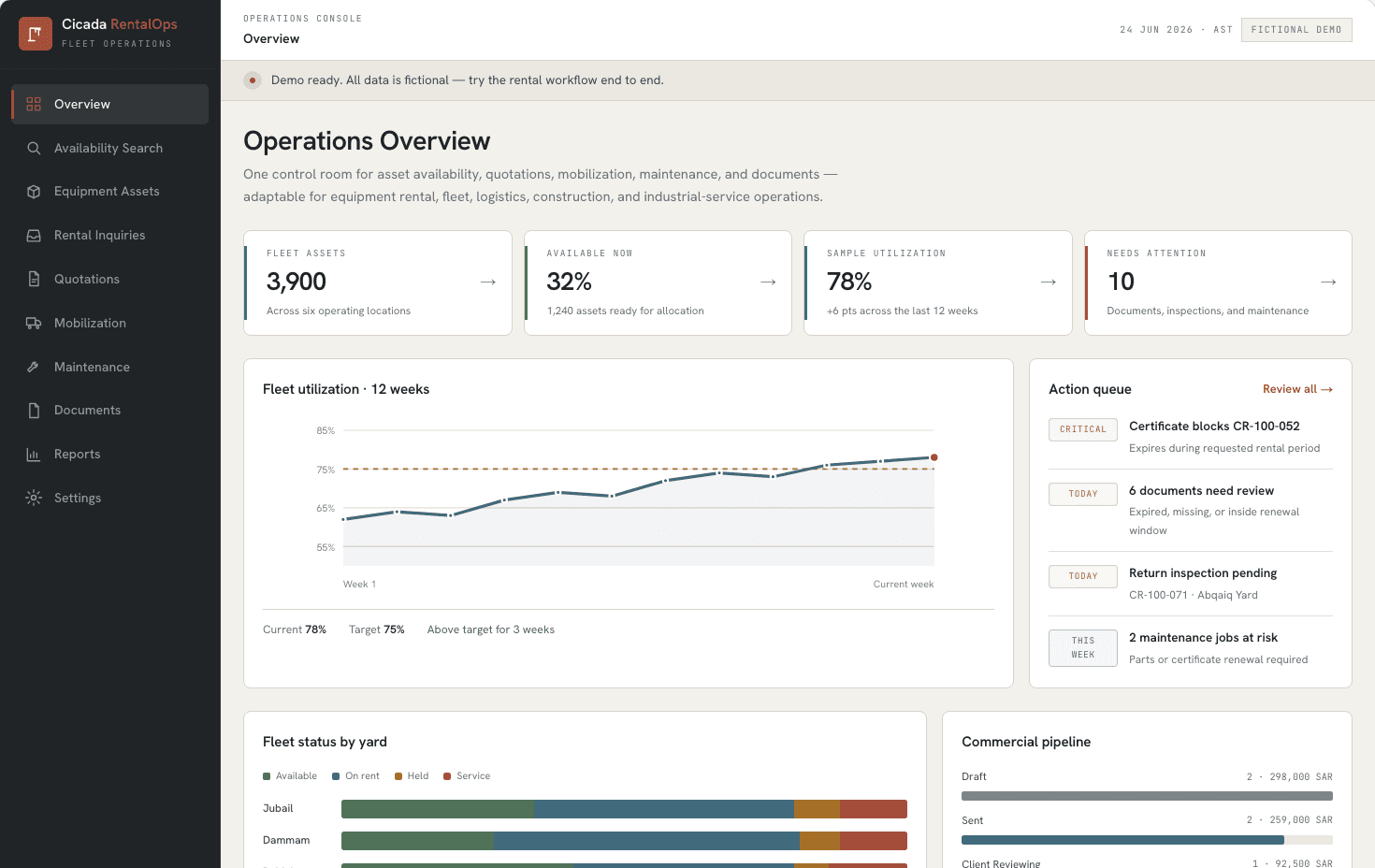
Operational platforms and control rooms
Systems that run the day: availability, dispatch, maintenance, documents and an action queue for managers.
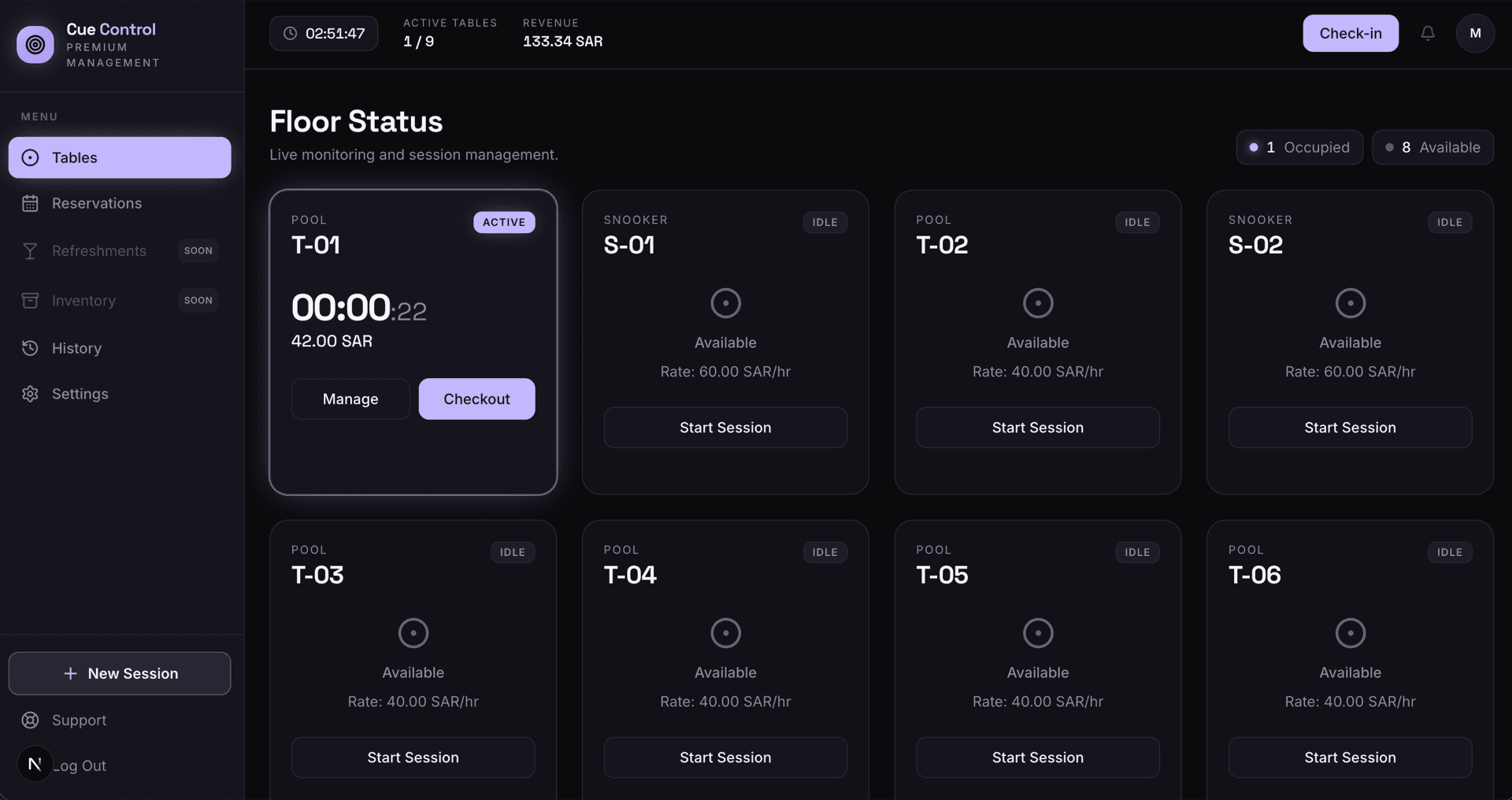
Booking and session management
Reservations, check-in, live sessions and revenue for venues where capacity is the product.
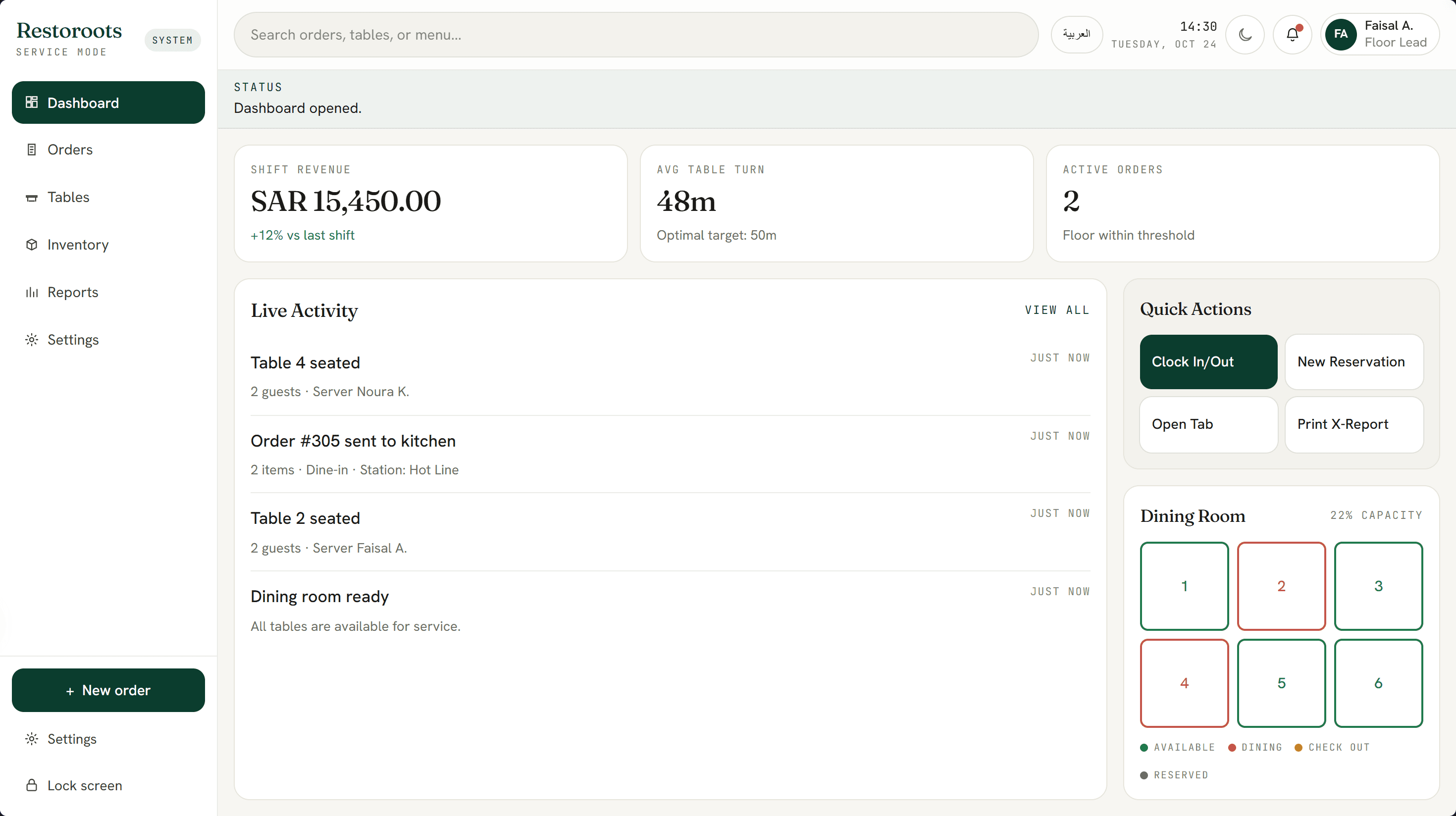
POS and invoicing
Checkout, kitchen display, branch pricing and compliant invoicing for restaurants and retailers.
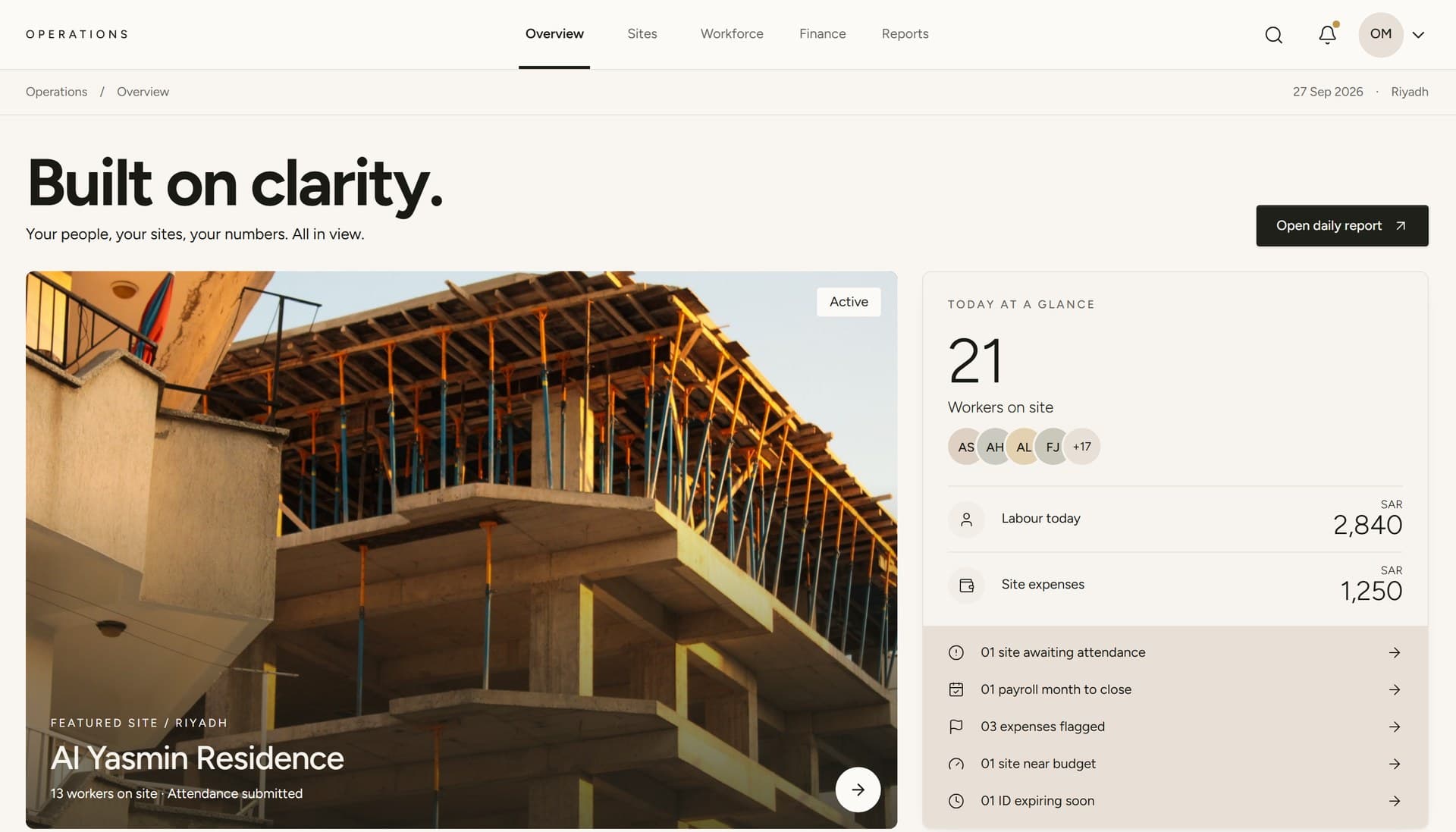
HR, workforce and compliance
Employee records, attendance, document expiry, payroll checks and Saudization tracking.
ERP, ordering and inventory
Orders, approvals, stock allocation, purchasing and receivables on one record.

Screens from systems Cicada has built, shown with sample, demo or illustrative data.
What every engagement can include.
- Workflow discovery and process mapping
- Arabic and English interface design
- Web and mobile applications
- Integrations and APIs
- Data migration
- Dashboards and reporting
- Role-based access and audit trails
- Cloud or self-hosted deployment
- Training and adoption
- Support and iteration
Three situations where custom software earns its place.
Replacing spreadsheets with a first system
The business has grown past sheets and chat, and needs one system for the workflow that matters most before anything else.
- One workflow first
- Data migrated cleanly
- Live in four to eight weeks
Extending or connecting existing platforms
The core tools work, but the gaps between them cost time. A custom layer connects them or adds the missing workflow.
- Keep what already works
- Integrations with clear ownership
- Fewer manual handoffs
Replacing a system the business outgrew
An old system or a product that no longer fits is holding the operation back, and a replacement can be phased in safely.
- Phased replacement
- Parallel running where needed
- No big-bang cutover
Built to connect with the platforms Saudi businesses depend on.
Integration planning starts with ownership and reliability: which system creates each record, which one may change it, and what the team sees when a connection fails.
The custom system
One record of truth. Each connection has an owner and a failure path.
- 01
ZATCA Fatoora
Phase 2 e-invoicing with clearance and reporting, directly or through a compliant provider.
- 02
Qiwa, Mudad and GOSI
Contract, payroll and registration data, from official exports or the access your establishment has.
- 03
Payments
mada, cards and Apple Pay through Saudi gateways and terminals.
- 04
WhatsApp Business
Customer messages and notifications through an approved provider, with consent recorded.
- 05
Accounting and ERP
The accounting or ERP platform you already run, through its API or reliable exports.
- 06
Your existing data
Spreadsheets and older systems migrated with mapping, cleaning and validation.
Evidence from systems we have built.
Our proof pages show working systems and the workflows behind them, across rental, construction, distribution, hospitality and recreation.
Rental operations
RentalOps
Availability, holds, mobilisation, maintenance and documents in one workflow.
Open proof02Workforce and site costs
SiteLedger
Attendance, worker register, wages and site cost reports for a Riyadh contractor.
Open proof03B2B ordering and distribution
OrchidTrade
Reseller ordering, credit, approvals, stock allocation and receivables.
Open proofJudge custom software by the work it removes.
The value of a custom system shows up in the operation: fewer hours lost to re-keying, fewer errors, faster answers and a team that actually uses it. Each should be measured against a baseline taken before launch.
Time
Measure the manual work the system removes.
- Hours spent re-keying data
- Reports prepared by hand
- Approvals waiting in chat
Accuracy
Measure how often the data is wrong.
- Errors traced to manual handoffs
- Duplicate records
- Corrections after the fact
Visibility
Measure how quickly managers get answers.
- Time to answer an operational question
- Problems spotted before they cost money
- Decisions made on current data
Adoption
Measure whether the team relies on it.
- Active users after launch
- Spreadsheets and workarounds retired
- Requests for the next release
During discovery, Cicada agrees the baseline, target, measurement owner and review window with you. Results depend on adoption, data quality and operating decisions; they are not guaranteed.
Custom software is not always the right answer.
If a product already fits your process, buy it, and we will tell you so. Custom development earns its place when the workflow, Saudi requirements, integrations or ownership are where your business differs.
| Decision | Off-the-shelf software | Custom software |
|---|---|---|
| Process fit | The team adapts to standard screens and steps. | The system follows the workflow that makes your business work. |
| Saudi requirements | Depends on the vendor's roadmap for the Saudi market. | ZATCA, Qiwa, PDPL and Arabic designed in from the first release. |
| Connections | Limited to the vendor's integration catalogue. | Built around the systems the operation already relies on. |
| Ownership and cost over time | Subscription per user, for as long as you use it. | The client owns the code and IP; cost follows the scope you choose. |
Find the service that matches your operation.
Each service page goes deep on one kind of system: the workflow, the screens, the integrations and when custom is the wrong choice.
Custom CRM development
Customer, sales and service systems for Saudi teams.
Open pageCustom dashboard development
KPI and operations dashboards built on agreed definitions.
Open pageCustom ERP development
One record from order to cash, built in phases.
Open pageBooking system development
Capacity, sessions, check-in and deposits for venues.
Open pagePOS and invoicing software
Checkout, branch pricing and compliant invoicing.
Open pageHR compliance software
Employee records, payroll checks and document expiry.
Open pageWorking with a Riyadh team
How on-site discovery and weekly delivery work in practice.
Open pageHow to choose a software company
What to ask a custom software partner in Saudi Arabia before you sign.
Open pageCustom software or off-the-shelf ERP
A decision guide for Saudi SMEs.
Open pageDiscover, design, build, deploy, support.
- 01
Discover
Learn how the operation really runs, where it slows down and what a useful first version would change.
- 02
Design
Map the solution and test a clickable prototype with the people who will use it.
- 03
Build
Engineer the system in weekly increments you can see and use.
- 04
Deploy
Launch with training and data migration so adoption sticks from the first day.
- 05
Support
Maintain, improve and extend the system as the business grows.
Data and access
Role-based access, audit trails, backups and recovery are defined against the sensitivity of each workflow.
Hosting, PDPL and NCA
Cloud or self-hosted deployment, including in-Kingdom hosting, assessed against PDPL and the NCA's cybersecurity controls.
Ownership and support
The client owns the custom code and IP by default, with a documented path for support and future changes.
Saudi requirements, designed in from the first release.
Software for Saudi businesses has to handle Arabic and English properly, right-to-left layouts, Hijri and Gregorian dates, ZATCA e-invoicing, Qiwa and Mudad, PDPL and the NCA's new controls. Cicada is based in Riyadh and builds for teams across the Kingdom, including Jeddah, Dammam, Khobar and the Eastern Province.
Practical answers before the first conversation.
01What kinds of software does Cicada build?
Operational business systems: customer and sales systems, dashboards, booking, ERP and inventory, POS and invoicing, HR and compliance, plus the integrations and internal tools around them.
02How much does custom software cost in Saudi Arabia?
It depends on the workflows, users, integrations, data migration and security involved. We scope a useful first release after discovery and give its cost and timeline before you commit to more.
03How long does it take?
Most first releases go live in four to eight weeks after discovery. Larger systems are delivered in further phases, each useful on its own.
04Should we buy a product or build custom?
Buy when a product fits your process. Build when the workflow, Saudi requirements, integrations or ownership are where your business differs. We will tell you which we think fits, even when the answer is a product.
05Can the system be in Arabic?
Yes. Interfaces, documents and reports can be Arabic, English or bilingual, with right-to-left layouts designed properly.
06Do you work outside Riyadh?
Yes. Cicada is based in Riyadh and works with businesses across Saudi Arabia, including teams in Jeddah, Dammam, Khobar and the wider Eastern Province.
07Do we own the code and intellectual property?
Yes. Cicada Solutions' default position is that the client owns the code and IP for the custom build, subject to the final agreement and any clearly identified third-party services.
Show us the part of the operation that holds everything up.
Tell us what the business does, which workflow causes the most friction and what tools you use today. We will respond with a practical starting point.
- What the business does and where
- The workflow that causes the most friction
- Tools, spreadsheets and systems in use
- Integrations, deadlines or regulations to meet